How do you tag a link to track a campaign?
Build a campaign link with UTM parameters and get a warning before a typo splits your reports.
What you enter stays on your device while you use this tool. Opening a shared link sends the settings in its address to HowToolbox to prepare the page.
More options
The paid keyword. Optional.
Tells links in the same place apart, for example header_button. Optional.
A campaign ID. Optional.
Campaign link
utm_source · utm_medium · utm_campaign
No typos found: no capital letters, spaces or leftover parameters.
Build a campaign link with UTM parameters and get a warning before a typo splits your reports.
How to use
- Enter the page the link leads to, then the source, the medium and the campaign.
- Add a term, content or ID if you use them, and switch on lower case to avoid look-alike values.
- Copy the link and use it in your email, advert or post.
How it works
UTM parameters are labels added to the end of a web address. When someone follows the link, analytics tools such as Google Analytics read the labels and credit the visit to a source (where it came from), a medium (the channel) and a campaign (which effort). Source, medium and campaign are the three to always use; term, content and ID are optional extras.
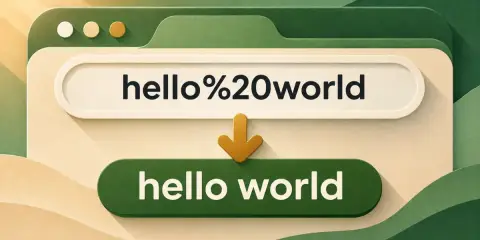
The labels are plain text, so spelling matters. Values are case sensitive: Email and email become two different mediums in your reports, and spring_sale and Spring-Sale two campaigns. Pick a naming habit, such as lower case with underscores, and keep to it. The tool encodes spaces and special characters, keeps the parameters already in your address and puts the #fragment last.
UTM labels do not hide anything: anyone can read them in the address, so never put personal data in them. Use them for links you control. Links inside your own site can overwrite the original source of a visit, so they are best kept for links that come from outside.
Worked example
How do you tag https://example.com/pricing for a spring newsletter?
- Set the source to newsletter, the medium to email and the campaign to spring_sale.
- The three labels are added after a question mark, joined by ampersands.
https://example.com/pricing?utm_source=newsletter&utm_medium=email&utm_campaign=spring_sale
Sources
Frequently asked questions
Which UTM parameters are required?
Google advises always setting utm_source, utm_medium and utm_campaign. utm_term, utm_content and utm_id are optional.
Does the case of a value matter?
Yes. Values are case sensitive, so use one style, usually lower case, to keep your reports in one piece.
What if my address already has a query?
Your parameters are kept and the UTM ones are added after them. If it already had UTM parameters, they are replaced.
Where does the #fragment go?
At the very end of the link, after the parameters, as browsers expect.
Should I use UTM links inside my own website?
It is best not to. A tagged internal link can start a new visit in your analytics and hide where the visitor really came from.