How do you say it in Pig Latin?
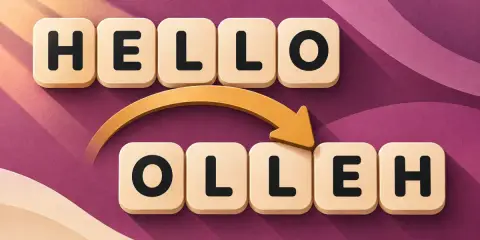
Move the opening consonants to the end and add “ay”, or decode it back.
What you enter stays on your device while you use this tool. Opening a shared link sends the settings in its address to HowToolbox to prepare the page.
Transformed text
5 words · 34 characters
Title case and ALL CAPS are kept; mixed-case words stay unchanged.
Your text stays in this browser and is never saved or placed in links.
Move the opening consonants to the end and add “ay”, or decode it back.
Five secret languages now share one page: switch between them without retyping your text.
How to use
- Type or paste your text into the box.
- Choose Encode or Decode; the result updates as you type.
- Copy the result with the Copy button.
How it works
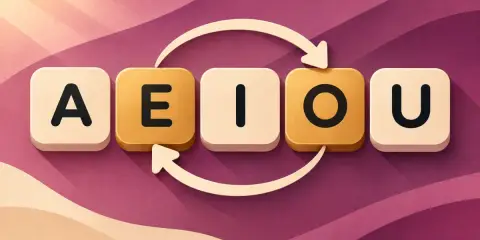
Move the initial consonant cluster to the end and add ay. A vowel-initial word gets way or yay. Vowels are a/e/i/o/u; y is a consonant. Words without these vowels stay unchanged. https://en.wikipedia.org/wiki/Pig_Latin
Decode guesses the most likely opening consonants and marks words with several possible originals. Title case and ALL CAPS are kept; mixed-case words stay unchanged.
Pig Latin is an English language game that children have played for well over a century; it appeared in print in the late 1800s, and the name is a joke, since it has nothing to do with Latin. Spoken quickly, it sounds like a foreign language to anyone who does not know the trick, which is why kids use it to share secrets in front of adults. It is also a playful way to practise sounds: to move the start of a word, you first have to hear where its first vowel is. Try short words first, such as cat (atcay) and dog (ogday), then whole sentences.
Worked example
Worked example: Pigs love to read books!
- In "Pigs" the consonant P moves to the end and "ay" follows: igs + p + ay = "Igspay" (the capital is kept).
- The same for the other words: "love" becomes "ovelay", "to" becomes "otay", "read" becomes "eadray" and "books" becomes "ooksbay".
- Punctuation stays where it was, so the sentence ends with "!".
Igspay ovelay otay eadray ooksbay!
Sources
- Wikipedia: Pig LatinUsed for: rules
Frequently asked questions
Why does "pig" become "igpay"?
The consonants before the first vowel move to the end and "ay" is added: p-ig becomes ig-p-ay. A word that starts with a vowel just gets "way" or "yay" at the end, so "apple" becomes "appleway".
Can decoding always recover the original?
No. For example, igspay could have been pigs or spig. The tool chooses a plausible spelling and marks words with several candidates. Check marked guesses; words without a matching ending stay unchanged.
Is my text sent anywhere?
Text stays in this browser and is never saved or placed in links.
How much text can I enter?
Up to 20,000 UTF-16 units; some emoji use more than one unit.
What is the difference between way and yay?
Only words that start with a vowel are affected: "egg" becomes "eggway" or "eggyay". Both endings are in use and there is no single standard. Words starting with a consonant always get "ay".